While in school preparing for ministry, I was often annoyed by the idea that I could not take communion by myself, or that I needed someone “approved” to administer it to me. That changed after a brief but pointed rebuke from a roommate who shifted my perspective entirely. He said, “Communion is not for individuals; it is for the church. That is why it is called Communion.” So simple, and so humbling.
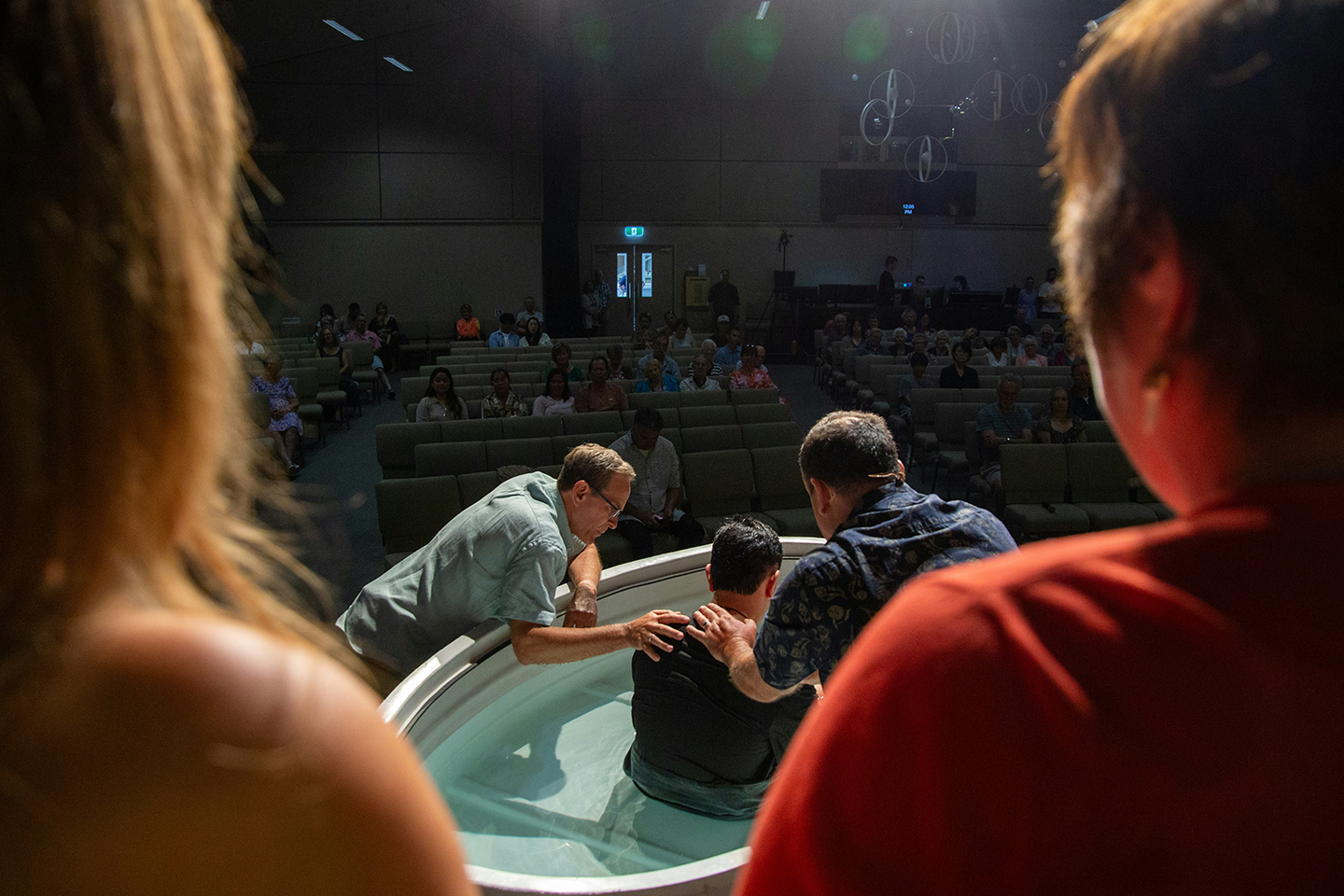
Questions often arise about why ordained pastors or elders are given the particular responsibility of administering baptism and Communion. Here I hope to offer a simple defense of why ordination is required for those who administer these sacred ordinances.
Apostolic Oversight
Do not be alarmed by the bold heading. There are no New Testament apostles today. However, the apostles did establish a pattern in the Epistles that the ministry of the ordinances would be administered under the authority of apostolic or pastoral leaders. (Full disclosure: I understand the office of “apostle” in Ephesians 4:11 to be akin to a missionary or church planter today.) Scripture does not give an explicit verse saying that only ordained clergy may baptize or administer communion.
However, the New Testament consistently shows that the ordinances are administered by those entrusted with spiritual oversight — pastors and elders. In Acts, the apostles and their close co-laborers most frequently perform baptisms (Acts 2:41; 8:12; 8:36–38; 9:18; 10:47–48; 16:14–15). Some point to Philip baptizing the Ethiopian eunuch (Acts 8) as an example that one need not be ordained to baptize. Yet Philip had been set apart by the apostles for ministry in Acts 6 — what some would consider a form of ordination.
Even when Paul minimizes who performed baptisms in order to emphasize the gospel, it is still clear that baptisms were conducted by recognized ministry workers (1 Cor. 1:14–17). Likewise, Paul treats communion with great seriousness in 1 Corinthians 10–11. He exercises strong oversight over its practice in response to abuses, grounding it firmly in the words of Christ. In Acts 2:42, the “breaking of bread” is placed within the apostles’ teaching and fellowship — again indicating apostolic oversight.
There is little to no evidence in the New Testament that baptism or communion occurred apart from the supervision of set-apart (ordained) church leaders.
Recognized Church Leaders
The doctrine of the priesthood of all believers is one of the great gifts recovered in the Protestant Reformation. It teaches that every true believer in Jesus Christ has equal access to God through Christ and requires no human mediator for the forgiveness of sins. Every believer is a priest who can approach God directly.
However, this does not mean that God has not established structure and order within the local church. Paul consistently distinguishes between the congregation and those set apart (ordained) for teaching, guarding doctrine and directing the life of the church — pastors and elders.
In the pastoral epistles, Paul is very specific about these leadership roles. In 1 Timothy 3 and Titus 1, elders are formally recognized officeholders. In 2 Timothy 2:2 we see that teaching and ministry responsibility is intentionally passed from faithful leaders to future leaders. In 1 Timothy 4:14; 5:22; and 2 Timothy 1:6, we see leaders being recognized and commissioned through the laying on of hands. As Hebrews 5:4 states, “No one takes this honor for himself, but only when called by God, just as Aaron was.”
Though these passages do not mention baptism or communion directly, they clearly model a pattern of set-apart (ordained) church leadership and congregational recognition of specialized ministry roles.
Baptism and Communion are central acts of the church’s worship. If pastors and elders are charged with guarding sound doctrine and preserving right practice, it is reasonable to conclude that the ordinances belong under the authority of those with recognized and accountable spiritual leadership.
Church Ministry
We too often reduce faith and worship to individualistic expressions and forget that we are saved into a worshiping community. The ordinances are ministries of the church, not independent acts of private believers. Yes, individuals must be Christians to be baptized or to take communion, but these actions occur within the context of the local church’s ministry.
Baptism and communion are signs of our union with Christ and incorporation into his body (1 Cor 10:17; 12:13). They are moments of teaching, discernment and doctrinal faithfulness. Baptism represents entry into the church, and communion represents ongoing fellowship and participation in Christ’s body.
Because of this, only those charged with guarding the doctrine and order of the church — elders and pastors — should administer these ordinances. They are part of the responsibility to “watch over the flock” (Acts 20:28) and to maintain order in worship (1 Cor. 14:40).
Guarding the Water and the Table
Paul’s letters to the Corinthians show how spiritual immaturity can cause great harm. In 1 Corinthians 11:17–34 he rebukes, corrects and instructs the church on how to approach communion. This is because communion is not something to be practiced whenever or however anyone desires. The ordinances can be misapplied and even abused. Requiring pastoral oversight helps prevent this.
This does not mean pastoral oversight is always perfect. Sometimes someone may be baptized prematurely, or someone may receive communion while their heart and life are not right with the Lord. But God has placed leaders in his church who bear responsibility for maintaining reverence and meaningful participation in the ordinances.
Conclusion
The ordinances are not mere activities the church performs. They are not “busywork” given by the Lord. They are holy, God-glorifying acts that proclaim the gathering of God’s people in Christ. When Martin Luther administered the Lord’s Supper for the first time, he was overwhelmed with fear and trembling. Baptism is too significant to be performed haphazardly in a backyard pool apart from the ministry, celebration and accountability of the church community.
The ordinances belong under the guidance, instruction and supervision of the church and its set-apart (ordained) leaders.